Monitoring and surveillance are two of the main applications of
wireless sensor networks. Network coverage measures how well an area
is monitored by a sensor network. As an important research issue in
wireless sensor networks today, the coverage problem has been
studied extensively, and many solutions have been proposed. Some
solutions focus on pure coverage problems to characterize the
coverage of wireless ad hoc sensor networks, i.e., the  -coverage
problem [55] bnd the arrier coverage problem
[38]. Other solutions integrate network
connectivity into coverage problems, since network connectivity,
which indicates whether any two nodes in a sensor network can
communicate with each other, is necessary for successful data
transmission.
-coverage
problem [55] bnd the arrier coverage problem
[38]. Other solutions integrate network
connectivity into coverage problems, since network connectivity,
which indicates whether any two nodes in a sensor network can
communicate with each other, is necessary for successful data
transmission.
We have investigated variations of coverage models in wireless sensor networks and some results are briefly described as follows.
Given a barrier (i.e., a path, a cycle, a simple polygon) and mobile sensors (or robots) that are lying in the interior of this barrieri, where the sensors can move autonomously in the plane, we investigate how to move the sensors within this region so as to optimize either the minimum sum or the minimum of the maximum of the distances covered by the respective sensors. In [10], we introduced the above problem and showed that,
 time where
  is the number of mobile sensors,
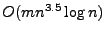 time where
  is the size of the simple
polygon,
is the size of the simple
polygon,
 , there is an
 -time algorithm for the min-sum problem
on the unit-disk-barrier with an approximation ratio of no more than
-time algorithm for the min-sum problem
on the unit-disk-barrier with an approximation ratio of no more than
 , and
, there is an
, and
, there is an
 -time algorithm for the min-sum problem
on a simple polygon with an approximation ratio of no more than
.
-time algorithm for the min-sum problem
on a simple polygon with an approximation ratio of no more than
.
Most recently, we studied the
-barrier coverage problem on a belt
region [38] and proposed an efficient algorithm
for it with an approximation ratio of no more than  . A belt region with
a sensor network deployed over it is said to be
-barrier
covered if and only if all paths crossing through the belt are
-covered by the sensor network.
. A belt region with
a sensor network deployed over it is said to be
-barrier
covered if and only if all paths crossing through the belt are
-covered by the sensor network.
In [11], we investigate the
problem of converting (connected) networks of omnidirectional
sensors to strongly connected networks of sensors with multiple
directional antennae. Consider a set  of
points in the plane
modeling sensors of an ad hoc network. Each sensor uses a fixed
number, say
of
points in the plane
modeling sensors of an ad hoc network. Each sensor uses a fixed
number, say
 , of directional antennae modeled as a
circular sector with a given spread (or angle) and range (or
radius). In the paper, we give algorithms for orienting the antennae
at each sensor so that the resulting directed graph induced by the
directed antennae on the nodes is strongly connected, and also study
tradeoffs between angle spread and range for maintaining
connectivity.
, of directional antennae modeled as a
circular sector with a given spread (or angle) and range (or
radius). In the paper, we give algorithms for orienting the antennae
at each sensor so that the resulting directed graph induced by the
directed antennae on the nodes is strongly connected, and also study
tradeoffs between angle spread and range for maintaining
connectivity.
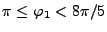
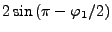
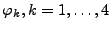
Table 4 summarizes the results obtained and also mentions
previous results from the literature. We assume that the maximum
length of edges in a Minimum Spanning Tree of
is 1. (Notation:
Let  be a given non-negative value in
  such
that the sum of angles of
antennae at each sensor location is
bounded by
such
that the sum of angles of
antennae at each sensor location is
bounded by
 .)
.)
In [11], we gave several
tradeoffs between antenna spread and range when each sensor has
directional antennae,
 , so as to guarantee the
resulting network is strongly connected. Several problems remain
open. Lower bounds are lacking from our study and it remains open to
prove NP completeness results for the case of multiple antennae per
sensor. Another interesting question concerns ensuring that for a
given integer
, so as to guarantee the
resulting network is strongly connected. Several problems remain
open. Lower bounds are lacking from our study and it remains open to
prove NP completeness results for the case of multiple antennae per
sensor. Another interesting question concerns ensuring that for a
given integer  the resulting network is strongly
-connected,
i.e., it remains strongly connected after the deletion of any
the resulting network is strongly
-connected,
i.e., it remains strongly connected after the deletion of any  nodes.