


Network facility location problems investigate where to physically locate a set of facilities (i.e., resources, servers) in the underlying network to satisfy some set of demands (i.e., customers, clients). The demand set consists of all points of the network that require services, and the supply set consists of all candidate locations of facilities. The goal is to place these facilities in the supply set such that the quality of service provided is optimized. In general, the quality of service is measured by some objective function, subject to a set of constraints. There are many different objective functions of possible interests, among which the minimization of maximum distance from a demand point to its closest facility is one of the most studied. The corresponding problem is referred to in the literature as the center problem.
The network center location problem has been extensively studied in
the literature. In [37],  -center
problems in general networks have been shown to be
-center
problems in general networks have been shown to be  -hard (even
when the network is a planar network of maximum vertex degree four).
However, center problems are no longer
-hard when either
is
constant
[37,50], or
the underlying network is restricted to be a specialized network,
such as a tree
[35,37], a
cactus [8], or a partial
-hard (even
when the network is a planar network of maximum vertex degree four).
However, center problems are no longer
-hard when either
is
constant
[37,50], or
the underlying network is restricted to be a specialized network,
such as a tree
[35,37], a
cactus [8], or a partial  -tree (fixed
) [27].
We have achieved significant results for center
location problems in general networks as well as specialized
networks, such as tree networks, cactus networks, and partial
-tree networks (fixed
). Our achievements are summarized in
Table 2.
-tree (fixed
) [27].
We have achieved significant results for center
location problems in general networks as well as specialized
networks, such as tree networks, cactus networks, and partial
-tree networks (fixed
). Our achievements are summarized in
Table 2.
| Underlying network | Problem | Previous result | Our result |
A
tree 
|
Weighted
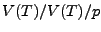 (fixed
)
(fixed
) |
 [35]
[35] |
 [7,49]
 |
Weighted
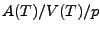 (fixed
)
(fixed
) |
[35] |
[7,49] |
|
A cactus 
|
Unweighted
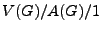
|

|
[6] |
Unweighted
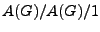
|
|
[6] |
|
Weighted
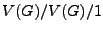
|
|
[8] |
|
Weighted
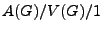
|
|
[8] |
|
Weighted
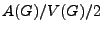
|
|
 [8]
[8] |
|
| Obnoxious
|
|
[8] |
|
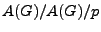
Unweighted
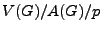
|
|
 [6]
[6] |
|
Unweighted
|
|
 [6]
[6] |
|
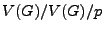
Weighted
|
|
 [6]
[6] |
|
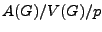
Weighted
|
|
[6] |
|
| A partial
-tree
|
Weighted
|
|
 [14]
[14] |
| (fixed
) |
Weighted
(fixed p) |
 [27]
[27] |
 [14]
[14] |
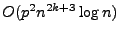
| Weighted
|
|
 [14]
[14] |
|
| A general network
|
Weighted
|
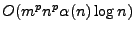
 [50]
[50] |
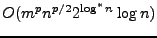 [14]
[14] |

 is the inverse Ackermann function.
In Table 2,
we use a 3-position scheme of
Handler and Mirchandani [31],
that is,
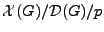 (supply set/demand
set/number of facilities), to label different problems. Mainly, four
cases of the center problem, where the demand set
(supply set/demand
set/number of facilities), to label different problems. Mainly, four
cases of the center problem, where the demand set
 and the supply set
 are either subsets of the vertex
set
are either subsets of the vertex
set  or subsets of the point set
  , are considered. When
the demand set is a subset of the vertex set, its weighted version
of the problem is also considered where each demand vertex is
associated with a non-negative weight.
, are considered. When
the demand set is a subset of the vertex set, its weighted version
of the problem is also considered where each demand vertex is
associated with a non-negative weight.
Moreover, we also have some achievements on variations of the
network center location problem in an edge-weighted tree network,
including conditional extensive facility location problems (CELP),
continuous
-edge-partition problems (CEPP),
and conditional covering problems (CCP). Our
results are summarized in
Table 3.
| Problem | Previous result | Our result |
| CELP |
[51] |
[13] |
| Max-Min CEPP |
[40] |
 [5]
[5] |
| Min-Max CEPP |
[40] |
 [5]
[5] |
| CCP in a path |
[32] |
[49] |
| CCP in an extended-star |
[32] |
 [49]
[49] |
| CCP in a tree |  [33]
[33] |
 [49]
[49] |
 is the height of the underlying tree
network.
is the height of the underlying tree
network.